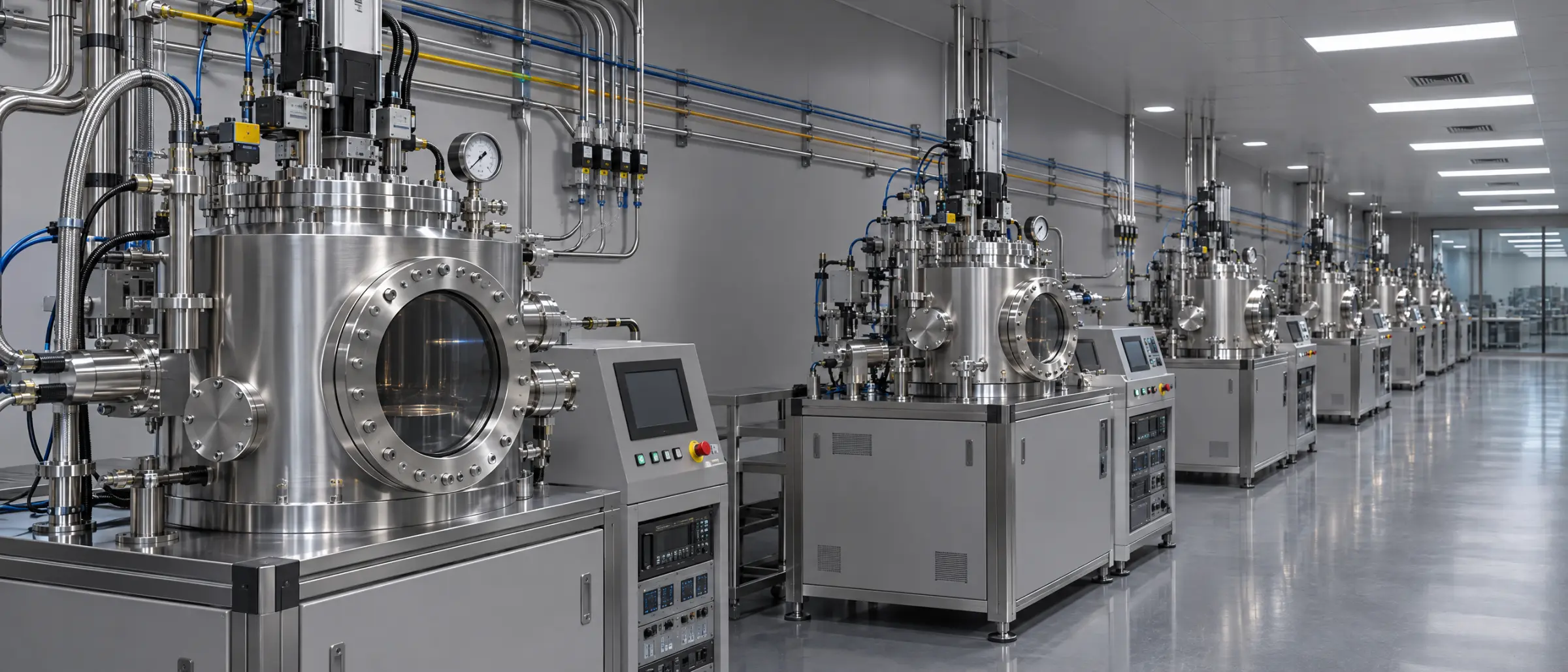
Row of stainless-steel vacuum deposition systems in a clean laboratory

Atomic Layer Deposition (ALD) Coating Services

Home
Services

ALD Coating Services

Custom ALD Coatings, Developed Around Your Part

VaporPulse Technologies provides atomic layer deposition (ALD) coating services for components that standard thin film deposition handles poorly: parts with internal channels and high-aspect-ratio features, temperature-sensitive polymers, porous media, and additively manufactured geometries. Instead of offering a fixed recipe menu, we review your substrate, geometry, and performance target, then select or develop the process that fits.

Our work covers the full path from first feasibility study to repeatable output: custom ALD coatings for samples and prototypes, ALD process development for new chemistries, low-volume and pilot production, and custom reactor systems for teams bringing deposition in-house. We support engineers and researchers in aerospace and defense, medical devices, electronics and sensors, energy storage, and university labs.

Years of hands-on ALD process experience
15+
Typical turnaround for standard projects
2–4 wk
Core services, from feasibility studies to custom reactors
6

Trusted by

  • NASA
  • Medtronic
  • Raytheon
  • US Army

Custom ALD Coating for Components and Delicate Substrates

Our core coating service for metals, ceramics, glass, silicon, polymers, and 3D-printed parts. Each project starts with a technical review, moves to sample coating, and continues into low-volume or pilot runs once results check out. Thermal ALD is complemented by MLD and modified CVD when a film calls for it. Not sure which film you need? Start with ALD coating materials.

We Provide

  • ALD on non-standard and delicate substrates
  • Custom process development tailored to client needs
  • Rapid prototyping, low-volume, and pilot production
  • R&D-backed knowledge of chemistries, precursors, and thin film performance
Explore ALD coating services

Complex Geometry ALD Coating for Internal Channels and 3D Parts

Conformal coverage inside tubes, capillaries, blind holes, lattices, and porous structures, where line-of-sight methods such as PVD leave surfaces bare. We set precursor dose, exposure, and fixturing for each geometry, with plasma-free options for polymer parts. Pair it with protective barrier coatings to seal internal passages against corrosion.

We Provide

  • High-aspect-ratio structures and internal features
  • 3D capable chambers for non-flat parts
  • Plasma-free coating for polymers and organics
  • Low thermal budget processes
Explore complex geometry coating

ALD Process Development, Feasibility Studies and Prototyping

For films and substrates that no off-the-shelf recipe covers. We turn your requirement into measurable targets, select precursors and co-reactants, coat prototypes for your testing, and refine the process until it is ready for pilot production or transfer. Programs that outgrow service runs can continue on a custom ALD reactor.

We Provide

  • Coating feasibility studies
  • Prototype and sample coating
  • Custom ALD chemistry development
  • Pilot production and process transfer
Explore ALD process development

ALD Barrier Coatings for Moisture, Oxygen, Corrosion and Chemicals

Dense, conformal oxide films and multilayer stacks that protect electronics, sensors, optics, and metal parts while adding only nanometers to critical dimensions. We match the film to the operating environment and recommend test conditions that reflect real service. For parts with internal surfaces, see complex geometry ALD coating.

We Provide

  • Moisture and oxygen barrier coatings
  • Corrosion protection films
  • Chemical-resistant coatings
  • Encapsulation of sensitive components
Explore ALD barrier coatings

ALD Coating Materials and Thin-Film Design

Film selection and design across metal oxides such as Al₂O₃, TiO₂, HfO₂, and SiO₂, nitrides like TiN, sulfides, metals, and nanolaminates. We balance what the film must do, whether barrier, dielectric, conductive, or optical, against what the substrate can tolerate. When the right chemistry doesn't exist yet, the work moves into ALD process development.

We Provide

  • Al₂O₃, TiO₂, HfO₂, SiO₂, TiN and more
  • Metals, oxides, nitrides, and sulfides
  • Nanolaminates and multilayer films
  • Custom recipe development to meet tight specs
Explore ALD coating materials

Custom ALD Reactor Systems and Deposition Tooling

Reactors, chambers, precursor delivery, and gas handling designed for parts and chemistries that wafer-oriented tools can't accommodate, including large or irregular parts, internal flow paths, and powders. Thermal, plasma-enhanced, or both, with training for in-house operation. The design work draws on the same experience behind our ALD coating services.

We Provide

  • Custom ALD reactor design and manufacturing
  • Specialized chamber configurations for unique geometries
  • Precursor delivery and gas handling systems
  • Temperature and pressure control
Explore custom ALD reactors

ALD Capabilities

Substrates, Materials and Geometries We Coat

A compact view of what our ALD coating services cover. Feasibility is confirmed per part: we review temperature limits, outgassing, and surface chemistry before any coating run.

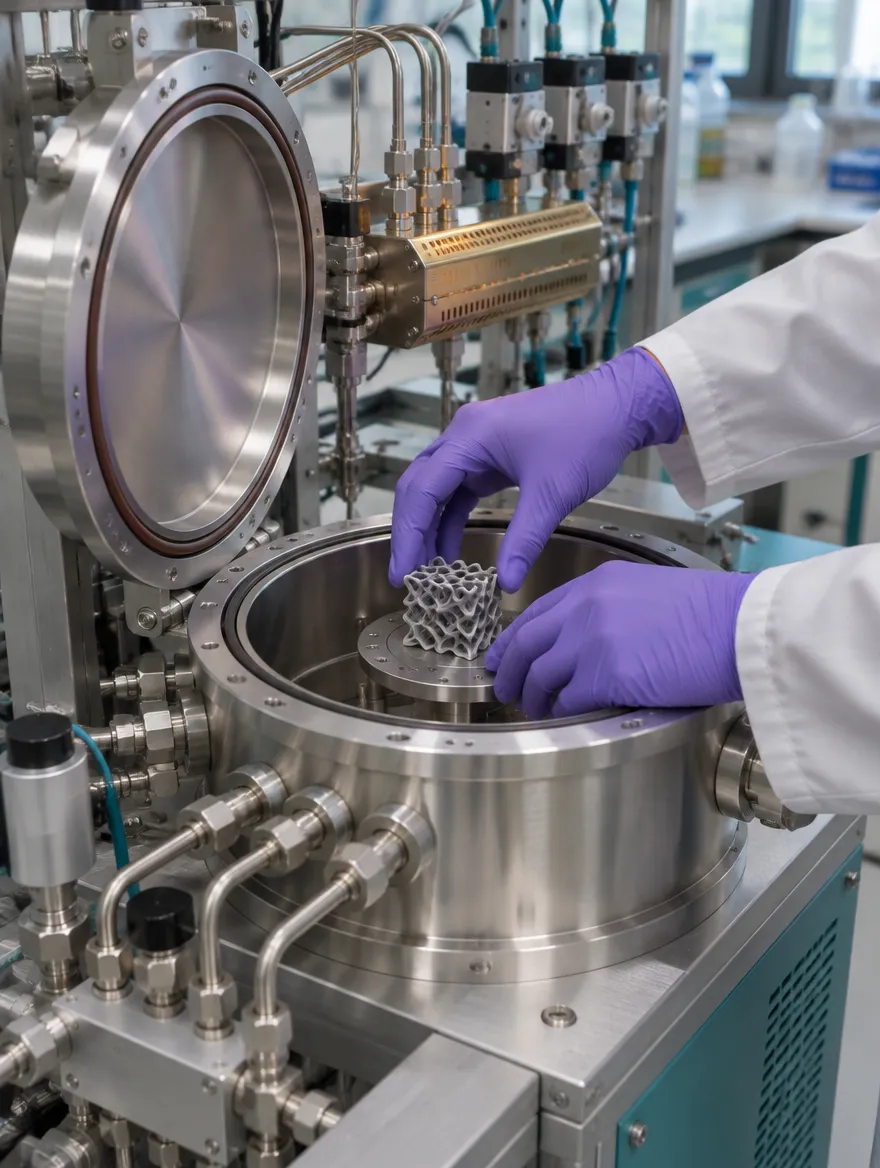
Gloved hands placing a 3D-printed lattice part into an open ALD reactor chamber
Deposition methods
  • Thermal ALD
  • Low-temperature, plasma-free processes
  • Molecular Layer Deposition (MLD)
  • Modified CVD
Film materials
  • Al₂O₃, TiO₂, HfO₂, SiO₂
  • Nitrides such as TiN
  • Sulfides and metals
  • Nanolaminates and multilayers
Substrates
  • Metals and ceramics
  • Glass and silicon
  • Polymers
  • Porous media
  • Additively manufactured parts
Geometries
  • Internal channels
  • Tubes and small bores
  • High-aspect-ratio features
  • Porous foams and lattices
Thickness control
  • Angstrom-level, set by cycle count
  • Uniform on non-flat 3D surfaces
Project scale
  • Feasibility studies
  • Sample and prototype coating
  • Low-volume and pilot runs
  • Process transfer

Film properties and selection guidance are covered on our ALD coating materials page. Internal features and aspect ratios are assessed in a complex geometry feasibility review.

Industries & Applications

Where Our ALD Coating Solutions Are Used

ALD earns its place where a part is valuable, the geometry is difficult, and the film has to perform. These are the applications we support most often.

Why VaporPulse

An ALD Partner Built for Difficult Coatings

Projects come to us when a standard process has already fallen short. Here is what we bring to them.

We have been working with VaporPulse for over three years and their commitment to develop a custom ALD process that exceeded our performance specifications was impressive.

Curtis Hill, NASA
  1. R&D depth

    More than 15 years of running ALD processes for programs at NASA, Medtronic, Raytheon, and the US Army, on real components rather than wafer coupons.

  2. Custom development

    We are materials-agnostic and chemistry-capable. When a standard recipe fails on your substrate, we develop one that works instead of steering you to a catalog film.

  3. Engineering collaboration

    You have engineering-level access throughout the project, so technical questions about nucleation, adhesion, or test results get technical answers quickly.

  4. Project flexibility

    Start with a few coupons, scale to pilot lots, or take a proven process in-house on a reactor built for it. Rush service is available for urgent work.

Technical FAQ

ALD Coating Questions From Engineers

Answers to the questions that come up most often when scoping a coating: added thickness, internal surfaces, substrate limits, process choice, and scaling up.

Ask an ALD Engineer
Q1. How much thickness does an ALD coating add to a part?

An ALD film adds roughly its own thickness to each coated surface, and that thickness is set by the number of deposition cycles. Where both walls of a slot or bore are coated, the opening narrows by about twice the film thickness: a 50 nm film narrows a passage by about 100 nm, or 0.1 µm. That is far less buildup than plating, paint, or polymer coatings, but surfaces with tight tolerances should still be marked on the drawing before development starts.

Q2. Can ALD coat the inside of tubes, channels and blind holes?

Yes. ALD precursors are gases that react with every exposed surface, so they reach internal features that sputtering and evaporation cannot. Long, narrow, or dead-end features need longer precursor exposure and purge times, and sometimes fixturing that routes gas through the part. We assess bore diameter, length, and aspect ratio during a geometry feasibility review.

Q3. What limits whether a substrate can be ALD coated?

The main factors are the substrate's temperature limit, outgassing under vacuum, and surface chemistry. Polymers may need low-temperature, plasma-free processes, and surfaces with few reactive sites can nucleate poorly without pre-treatment. Additively manufactured parts are reviewed for rough surfaces and trapped powder. We evaluate each substrate before coating.

Q4. Should my project use thermal or plasma-enhanced ALD?

Neither is universally better. Thermal ALD drives each reaction with precursor chemistry and substrate temperature and avoids plasma exposure, which suits polymers, organics, and deep internal features. Plasma-enhanced ALD can lower deposition temperature or reach film compositions that thermal routes struggle with. The right choice follows from the film, the substrate, and the geometry.

Q5. What information do you need to evaluate an ALD coating project?

Drawings or CAD files, the surfaces that must be coated, the substrate material and its temperature limit, the film or performance target, acceptable added thickness, quantities, and how you plan to test the coating. Photos or a sample part help us respond faster.

Q6. Can a prototype ALD process scale to production?

Yes. Once samples pass your testing, we plan repeat runs for pilot builds, qualification lots, and low-volume production. Teams that need higher throughput or full control can transfer the process to an in-house system, including a custom reactor designed around the same parts and chemistry.

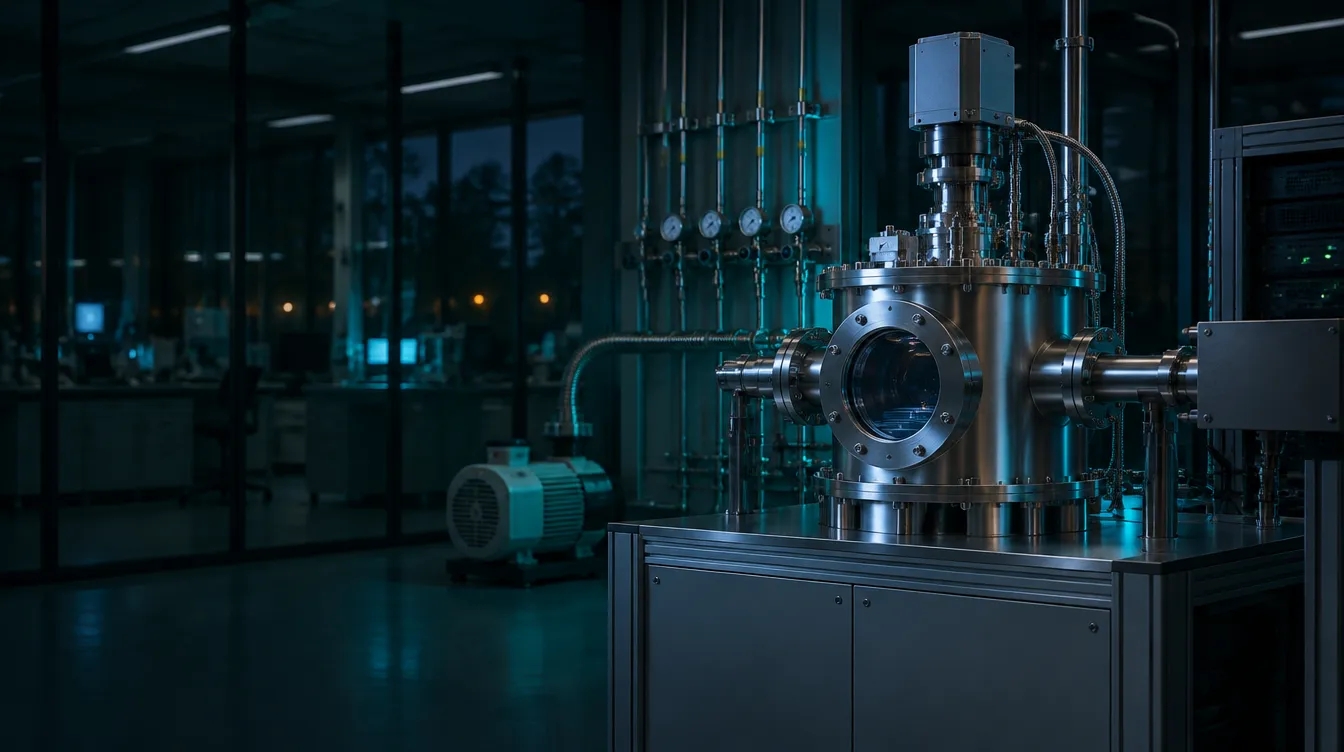
ALD reactor in a dimly lit thin-film laboratory

Start Your Project

Discuss Your ALD Coating Requirements

Send us a drawing, the substrate material, and what the coating needs to do. An engineer will review feasibility and recommend the next step, whether that is a sample run, a development study, or a quote for pilot production.