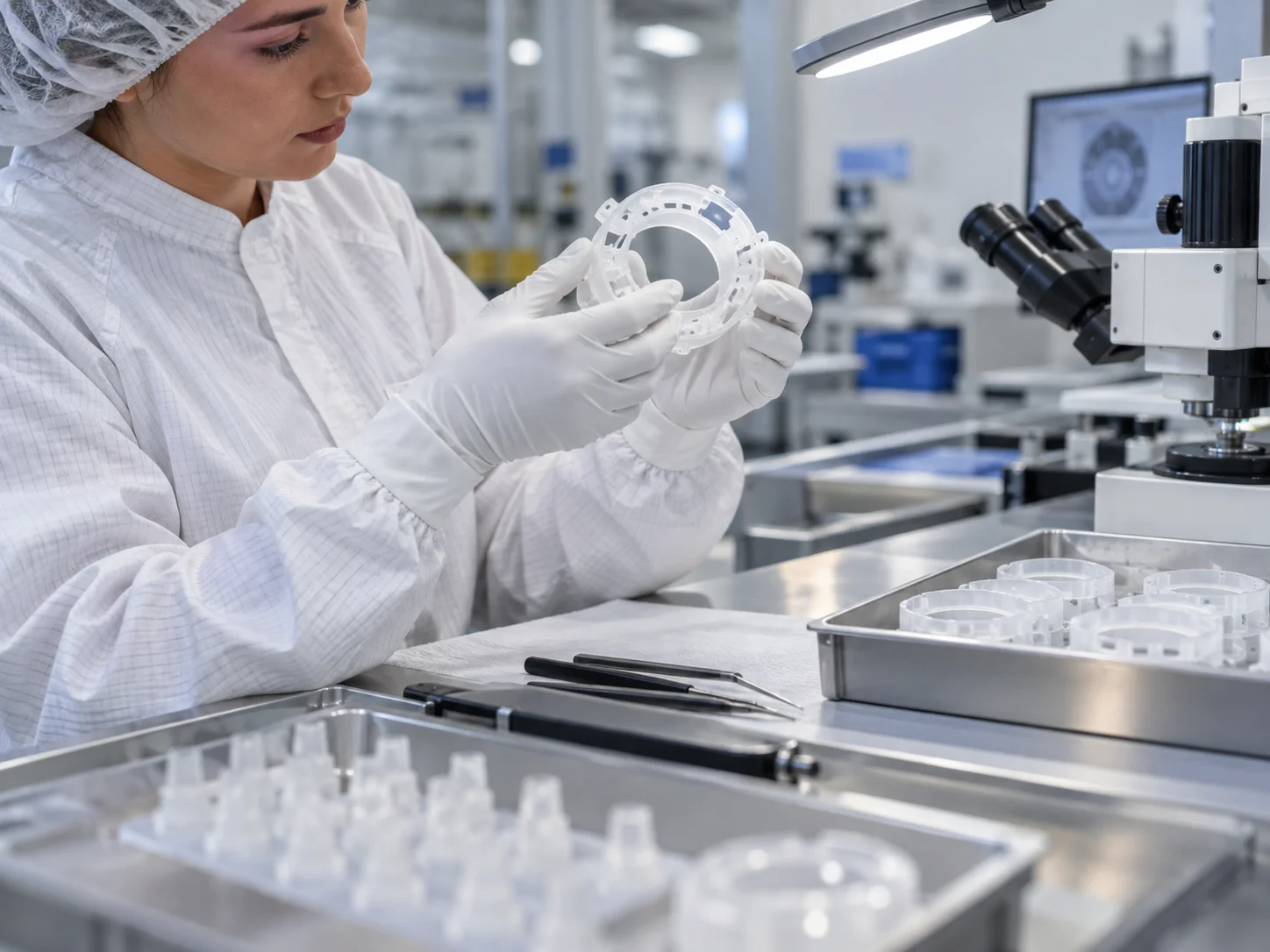
If a polymer component needs a thin protective barrier but plasma exposure could alter the surface, a plasma-free Atomic Layer Deposition process may be the better route. Plasma-free ALD for polymers uses sequential vapor-phase chemistry to build a conformal film without exposing the part to the reactive species and radiation associated with a plasma step. The process still has to match the polymer’s temperature limit, surface chemistry, geometry, and service environment.
At VaporPulse Technologies, we work with delicate and non-standard substrates, including plasma-free coating options for polymers and organics. This route is especially relevant when a part needs moisture, chemical, dielectric, corrosion, or environmental protection while the underlying polymer surface must remain as unchanged as practical.
Plasma-free does not mean risk-free. A thermal ALD process still exposes the component to heat, vacuum conditions, and reactive precursors. The useful engineering question is whether a plasma-free chemistry can form the required film under conditions the complete component can tolerate.
What Does Plasma-Free ALD for Polymers Mean?
Atomic Layer Deposition grows a thin film through repeated, self-limiting surface reactions. In a typical thermal ALD cycle, the reactor introduces one precursor, purges the excess, introduces a second reactant, and purges again. Each completed cycle adds a controlled amount of material.
Plasma-enhanced ALD, often called PEALD, replaces or supplements one of those chemical reaction steps with plasma-generated reactive species. That activation can make certain film chemistries possible at lower temperatures or change film properties in some applications.
Plasma-free ALD keeps the reaction chemistry thermal. The component does not need direct plasma exposure during the deposition cycle. VaporPulse includes this approach among our capabilities for complex geometries and delicate substrates. Polymers can respond very differently to energetic surface treatments than metals, ceramics, or silicon wafers.
Why Can Plasma Be a Problem for Some Polymer Components?
Plasma treatment is useful in many manufacturing processes. Engineers intentionally use it to clean, activate, functionalize, or etch polymer surfaces. Those same effects become undesirable when a specification requires the original polymer surface to remain chemically or mechanically stable.
Depending on the material and process conditions, plasma exposure can change surface chemistry, generate radicals, alter wettability, affect roughness, or modify polymer bonds. The response varies with resin chemistry, plasma gas, power, exposure time, pressure, and reactor configuration.
NIST research on low-temperature plasma exposure to polymers illustrates why engineers should avoid treating “plasma damage” as one universal effect. Researchers found that plasma-related surface changes depended on polymer chemistry, with different responses observed for PLA and PMMA under the tested conditions.
Sensitive components deserve extra scrutiny when their surface properties control function. Optical polymers, flexible components, microfluidic parts, polymer seals, organic layers, adhesive-containing assemblies, or devices with thin functional surfaces may have little tolerance for unintended surface modification.
When Is Plasma-Free ALD the Better Route?
Plasma-free ALD becomes worth evaluating when a compatible thermal chemistry can achieve the required coating function and the substrate should avoid plasma exposure.
One common case involves a polymer that already has the surface properties required for its final application. Plasma activation could improve film nucleation in some systems, but it could also alter that surface. A thermal process gives the coating developer another path to establish a functional barrier without intentionally exposing the substrate to plasma.
Complex geometry can also influence the decision. ALD relies on vapor-phase reactants rather than line-of-sight deposition, allowing properly developed processes to reach curved surfaces, recessed features, pores, and internal geometry.
High-aspect-ratio features deserve particular attention. Plasma-generated radicals may recombine along feature walls before reaching deeper surfaces, which can limit conformality in some PEALD processes. A well-developed thermal ALD chemistry may perform better in those geometries when the coating material and substrate permit it.
The required film function still controls the material choice. Through our custom ALD coating and materials capabilities, VaporPulse works with thin-film systems for moisture and oxygen barriers, dielectric insulation, corrosion protection, and other application-specific requirements.
For a broader discussion of heat limits, precursor absorption, outgassing, and polymer nucleation, see our article on coating temperature-sensitive polymers with ALD. That issue overlaps with plasma sensitivity, but the two are not interchangeable. A polymer may tolerate the process temperature while still being sensitive to plasma exposure.
What Plasma-Free ALD Does Not Solve
Removing plasma eliminates one source of substrate exposure. It does not eliminate the other compatibility questions.
Temperature still matters. The base resin, filler package, adhesive, seal, dye, embedded device, or previous surface treatment may set the true thermal limit. A polymer can soften, relax internal stress, warp, or change dimensions well below its melting point.
Precursor chemistry matters too. Some polymers absorb vapor-phase precursors, release trapped moisture or solvents under vacuum, or lack reactive surface sites needed for consistent film nucleation. A process that produces a continuous film on one polymer grade may behave differently on another grade within the same broad material family.
Mechanical behavior creates another constraint. Many ALD films are inorganic and comparatively stiff next to flexible polymer substrates. If a part bends, stretches, experiences repeated thermal cycling, or sees strain during assembly, the coating must remain continuous through that movement.
A barrier may look intact immediately after deposition yet crack later if the film and substrate respond differently to stress.
For these reasons, the lowest possible process temperature is not automatically the best process. The selected conditions still need to produce the required film quality, continuity, and adhesion.

What Should You Specify Before Coating a Polymer Component?
A useful coating request gives the process developer enough information to define what must remain unchanged and what the coating must accomplish.
Provide:
- Exact polymer name, grade, and manufacturer when known
- Fillers, plasticizers, colorants, coatings, or release agents
- Adhesives, seals, electronics, or dissimilar materials in the finished assembly
- Maximum allowable process temperature
- Critical dimensions and tolerances
- Areas that must remain uncoated
- Surface finish and cleaning history
- Expected moisture, oxygen, chemical, heat, vacuum, or plasma exposure in service
- Required electrical, optical, barrier, or corrosion performance
- Bending, flexing, abrasion, sterilization, or thermal-cycling requirements
- Internal channels, pores, blind features, or enclosed regions
- Available coupons or sacrificial parts for process development
A drawing and a clear failure mode are usually more useful than a coating-material request by itself. “Protect this polymer sensor from humidity without changing the connector dimensions” gives the coating team a measurable problem to solve. “Apply an ALD film” does not.
That level of detail also makes process qualification easier because the team knows which properties matter before coating begins.
How Do You Verify That Plasma-Free Polymer Protection Works?
Qualification should test the property the coating actually needs to preserve. Film thickness alone does not prove protection.
For a moisture barrier, testing should address moisture ingress or component performance after controlled humidity exposure. A dielectric application may require leakage, breakdown, or insulation measurements. Chemical protection should use the actual fluid, vapor, cleaning agent, or process chemistry the component will encounter.
Flexible parts may need bend testing or thermal cycling followed by inspection for cracks or performance changes. Components with tight tolerances may need dimensional verification both before and after processing.
Surface-sensitive polymer components may also warrant comparison between coated and uncoated controls. That makes it easier to determine whether the deposition process changed dimensions, surface chemistry, optical behavior, electrical response, or mechanical performance.
Prototype work is often the right stage to establish these acceptance criteria before moving toward pilot or low-volume production.
Protecting Sensitive Polymers Without Unnecessary Plasma Exposure
Plasma-free ALD for polymers is most useful when a component needs a very thin, conformal functional coating and plasma exposure creates an unacceptable surface risk. The process still requires careful control of temperature, precursor chemistry, nucleation, outgassing, geometry, and mechanical behavior.
VaporPulse develops custom ALD processes for delicate substrates, complex components, prototypes, and low-volume projects. If you are evaluating a polymer part, send us the exact material specification, a drawing, the maximum thermal exposure, and the environment the coating must withstand through our project consultation page. Those details give our team a much stronger basis for determining whether a plasma-free ALD route fits the actual component.
Our Other Blogs
september 1, 2026
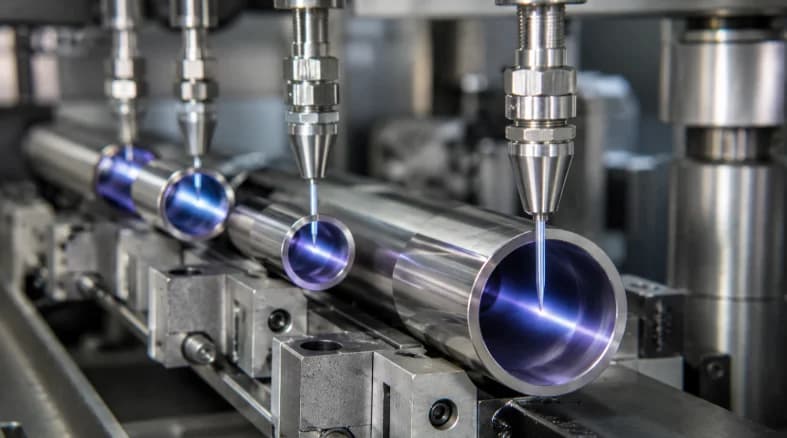
How to Coat the Inside of Stainless Steel Tubes and Small Bores

august 12, 2026
Can Temperature-Sensitive Polymers Be Coated With ALD?

august 4, 2026
How to Package and Ship Prototype Parts for ALD Coating
june 30, 2026
ALD vs PVD vs CVD: Coating Guide
october 17, 2025
ALD Coatings for Moisture and Corrosion Protection
Subscribe to Our Newsletter
Stay up to date with our latest news, blog posts, and exclusive updates delivered right to your inbox.