
Atomic layer deposition can be used on many temperature-sensitive polymers, but the process must be tailored to the exact material and finished component. The polymer’s glass transition temperature, dimensional stability, surface chemistry, outgassing behavior, and response to the chosen precursors all matter. Low-temperature ALD for polymers works best when the process is developed around the exact material grade and finished component.
VaporPulse Technologies works with non-standard and delicate substrates using low-thermal-budget processes, including plasma-free coating options for polymers and organic materials. This approach is relevant for parts that could distort, embrittle, swell, or change chemically during a conventional high-temperature coating process.
How Does Low-Temperature ALD for Polymers Work?
Atomic Layer Deposition builds a thin film through sequential vapor exposures. One precursor reacts with available sites on the surface, excess precursor is purged, and a second reactant completes the surface reaction. Repeating that cycle grows the film in controlled increments.
Because the reactions are self-limiting, ALD can produce highly conformal coatings over curved parts, recessed features, porous surfaces, and other geometries that are difficult to coat uniformly with line-of-sight methods. The process temperature depends on the coating chemistry. ALD is not a single process with one fixed operating temperature.
Some ALD chemistries operate at temperatures compatible with engineering polymers. For example, published research on alumina ALD gas barriers documented films between 1 and 26 nanometers thick on flexible polyethylene naphthalate and polyimide substrates at temperatures from 100 to 175°C. That demonstrates the technical feasibility of coating polymers, but it does not establish a universal safe temperature for every resin or assembly.
What Determines Whether a Polymer Is ALD-Compatible?
The first question is not simply, “What is the melting point?” A polymer can undergo significant changes well before it visibly melts.
Thermal limits of the complete part
The glass transition temperature, or Tg, indicates where an amorphous polymer becomes softer and more mobile. Processing near or above Tg can cause warping, stress relaxation, surface changes, or loss of dimensional accuracy. Semi-crystalline polymers also have melting behavior that must be considered.
The finished component may have a lower temperature limit than the base resin. Adhesives, seals, dyes, fillers, embedded electronics, and previous surface treatments can become the controlling factor. Exposure time matters too. A part that survives a brief temperature spike may not remain stable through a longer deposition run involving hundreds of cycles.
Engineers should provide the exact resin grade and full part construction, not just a broad material label such as ABS, nylon, or polycarbonate.
Surface chemistry and film nucleation
ALD depends on reactions at the substrate surface. Metals, oxides, and hydroxylated surfaces often contain reactive sites that support predictable nucleation. Some polymers have relatively inert surfaces with few functional groups available for the first precursor exposure.
Poor initial nucleation can create an incubation period before continuous film growth begins. During that stage, the coating may form isolated islands instead of a uniform barrier. A recipe that works on polyimide may behave differently on polyethylene, silicone, or a molded resin carrying release-agent residue.
Surface condition and precursor selection must be evaluated together. The objective is consistent nucleation without damaging or excessively changing the underlying polymer.
Precursor absorption and outgassing
Polymers can absorb vapor-phase precursors rather than keeping the reaction strictly at the outer surface. The precursor may diffuse into the polymer and create subsurface inorganic growth, a process commonly referred to as vapor phase infiltration or sequential infiltration synthesis.
Infiltration can be useful when the objective is to modify the polymer itself. It is less desirable when the specification calls for a distinct, dimensionally controlled surface film. Temperature, precursor pressure, dose duration, purge time, and polymer free volume influence how deeply the vapor penetrates.
Outgassing creates a separate concern. Moisture, solvents, plasticizers, or residual monomers released under vacuum can interfere with surface reactions. A molded part that appears stable at room conditions may behave differently after heating in a reduced-pressure chamber.
Does Lower Temperature Always Make ALD Safer?
No. Reducing the process temperature protects the substrate from heat, but going too low can compromise the coating chemistry.
Below a suitable process window, precursor reactions may slow or remain incomplete. Excess precursor can condense, ligands may not be fully removed, and impurity levels can increase. The resulting film may have lower density, weaker adhesion, or inconsistent barrier performance.
The correct target is the lowest temperature that still produces the required film properties on the actual substrate. Reaching that balance may require changes to the precursor chemistry, exposure duration, purge timing, or coating stack.
Plasma-enhanced ALD can activate reactions at lower substrate temperatures, but plasma exposure is not automatically appropriate for every polymer. Reactive species can alter the surface or affect sensitive organic materials. A plasma-free thermal route may be preferable where preserving the polymer surface is a primary requirement. VaporPulse lists plasma-free coating for polymers and organics among its complex-geometry and delicate-substrate capabilities.
Which ALD Materials Can Be Used on Polymers?
The coating material must match the substrate and the required function. VaporPulse works with ALD materials including aluminum oxide, titanium oxide, hafnium oxide, silicon oxide, selected nitrides, sulfides, and multilayer structures through its custom ALD coating services.
Material selection should begin with the actual failure mode:
- Moisture or oxygen reaching a sensitive component
- Electrical leakage or insufficient dielectric isolation
- Corrosive chemicals contacting the underlying surface
- A need for a chemically stable interface
- Dimensional limits that rule out a micron-scale coating
- Internal features requiring uniform, non-line-of-sight coverage
A material that performs well as a dielectric is not automatically the best choice for prolonged chemical immersion. Film thickness alone does not answer the question either. Defect density, adhesion, edge coverage, substrate roughness, and mechanical strain affect performance in service.
Mechanical mismatch deserves particular attention on flexible parts. Many ALD films are inorganic and comparatively brittle, while polymers deform more readily and often expand more in response to temperature changes. A film can be chemically sound yet crack during bending, thermal cycling, or assembly.
How Should Engineers Qualify a Polymer for ALD?
A useful feasibility review starts with precise information about the substrate and operating environment. Before requesting a coating trial, provide:
- Exact polymer type, trade name, and grade
- Tg, melting range, and documented short-term temperature limits
- Additives, fillers, adhesives, or embedded materials
- Part dimensions and critical tolerances
- Areas that must remain uncoated
- Surface condition and cleaning history
- Required coating function
- Expected chemical, moisture, heat, or plasma exposure
- Flexing, abrasion, sterilization, or thermal-cycling requirements
- Internal channels, pores, blind features, or assembled interfaces
A representative coupon or sacrificial part usually gives better information than resin data alone. Qualification should examine the properties that matter to the application, such as dimensional change, coating continuity, adhesion, electrical response, chemical resistance, or barrier performance.
The project also needs a measurable success criterion. “Coat this plastic with alumina” is incomplete. “Reduce moisture ingress while maintaining a defined thickness limit and surviving a specified bend radius” gives the process developer a clear engineering target.
When Is ALD a Better Choice Than Parylene, PVD, or CVD?
ALD is especially useful where a part has complex geometry, the film must remain extremely thin, or internal surfaces need uniform coverage. It is also a strong candidate where precise thickness control and inorganic film chemistry are central to the specification.
Parylene may be the better fit for room-temperature encapsulation where a micron-scale organic coating is acceptable. PVD is often efficient for accessible, line-of-sight surfaces. CVD remains useful for thicker films where the substrate tolerates higher processing temperatures.
VaporPulse’s comparison of ALD, PVD, CVD, and Parylene explains how geometry, film thickness, temperature, material availability, and production requirements affect the decision.
Can Your Temperature-Sensitive Polymer Be Coated?
In many cases, yes. The reliable answer comes from matching a low-temperature ALD chemistry to the polymer’s thermal limit, surface reactivity, vapor absorption behavior, and actual operating conditions.
VaporPulse develops custom processes for delicate substrates, complex parts, prototypes, and low-volume production. To evaluate a polymer component, send the exact material specification, maximum allowable thermal exposure, part geometry, and protection requirement through the VaporPulse consultation page.
Those details allow the coating process to be evaluated against the real component rather than a generic polymer category. They also clarify what needs to be tested before the coating moves from feasibility work to production.

Our Other Blogs
september 14, 2026
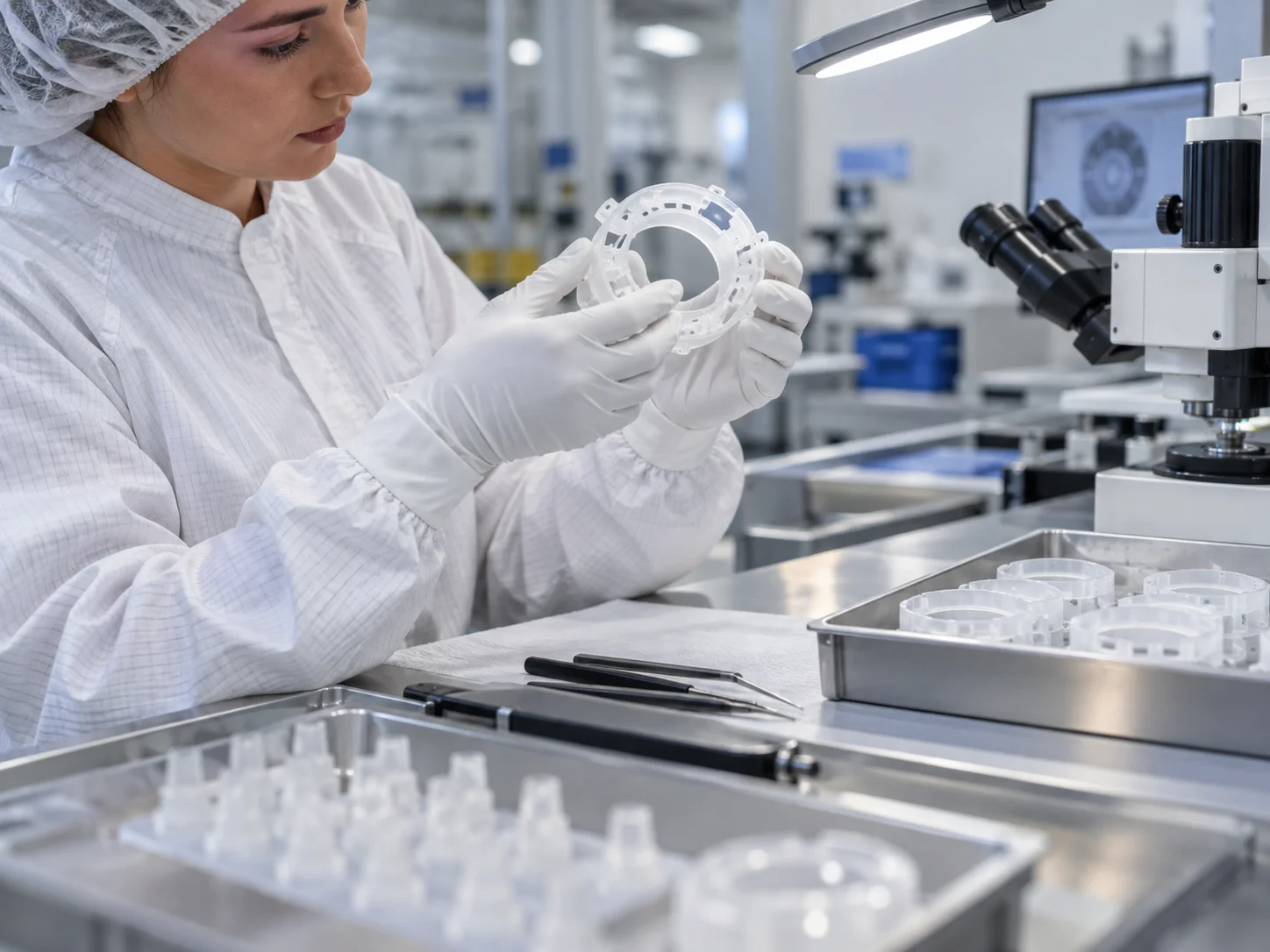
How Do You Protect Polymer Components Without Plasma Damage?
september 1, 2026
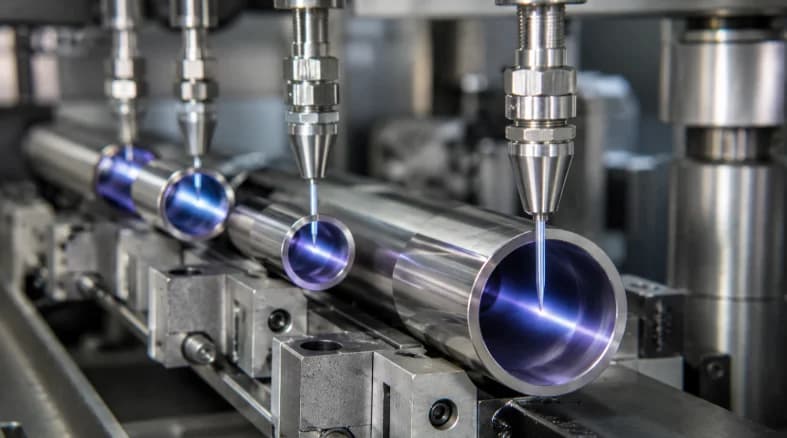
How to Coat the Inside of Stainless Steel Tubes and Small Bores

august 4, 2026
How to Package and Ship Prototype Parts for ALD Coating
june 30, 2026
ALD vs PVD vs CVD: Coating Guide
october 17, 2025
ALD Coatings for Moisture and Corrosion Protection
Subscribe to Our Newsletter
Stay up to date with our latest news, blog posts, and exclusive updates delivered right to your inbox.